Artificial Intelligence is here, and it is here to stay, for better or for worse. The question is, how do we create a future with AI that is for the better? Unfortunately, there is no simple answer. One thing is clear. The problem is too large for one person, one industry, or even a single nation. Solutions, legislation, regulations, and restrictions must be implemented through policy, social action, personal and societal education, and transparency in development, use, and intention. Ecological health and a human-centered approach must be centralized in the way forward. And much like any daunting task, we move one step at a time.
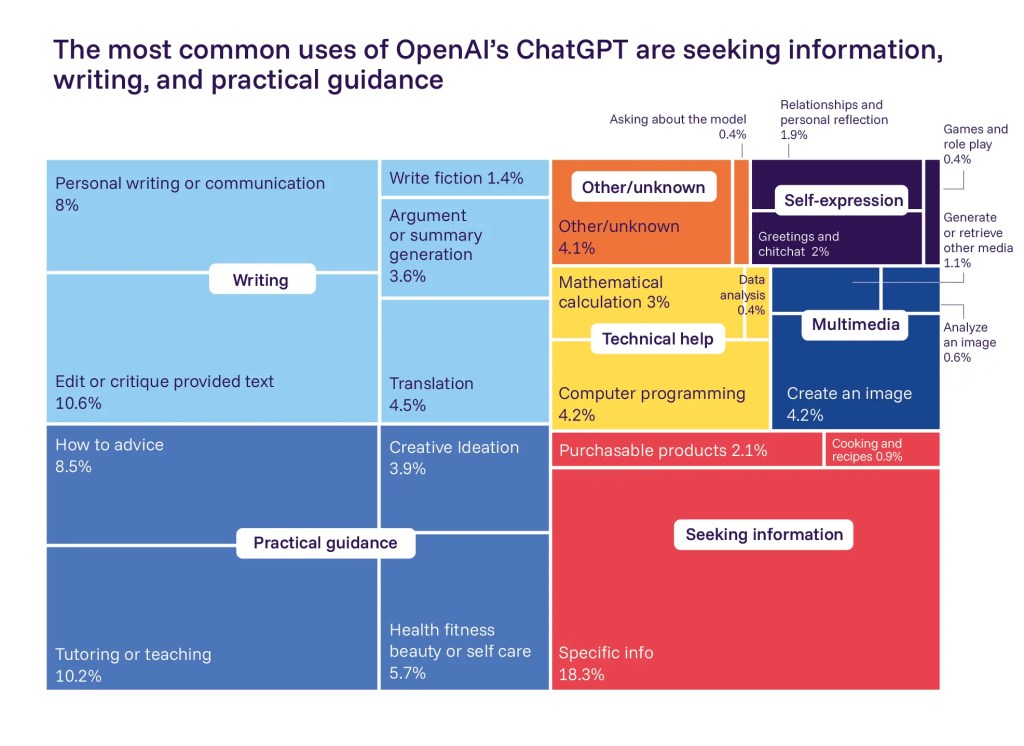
Already, AI is being implemented in nearly every sector of our society. Across governments, educational and medical industries, science, financial systems, the workplace, militaries, and more, AI is already being integrated. The use of AI is ubiquitous. AI is central to the algorithms that feed us news and data, keep us addicted to media platforms, and help operate the social media platforms the average person spends hours each day consuming. You are what you eat, better to make sure it is healthy. It is also being used to advance medicine and science, to help expose weapons and other risks worldwide, and to identify climate risks and potential catastrophes. Some believe AI can help us cure nearly every disease known to man. Some believe it will help produce new diseases that will end mankind. It can be used to aid in education, to understand complex and intricate data in a fraction of the time that it would take a group of trained scientists. It can also take those researchers’ jobs. AI can cure world hunger by identifying the most efficient path for money to flow to spread wealth and create abundance. It can also make a majority of jobs obsolete, automating the workforce, and funnel 99.9% of the world’s wealth into an even smaller group of oligarchs. At our current state of AI use, we see a proliferation of people using generative AI to create content slop for social media, chatting with bots, becoming socially isolated as they descend into the spiral of social media algorithms, and using it to solve problems we formerly solved with critical thinking. The general public is using AI in fairly mundane ways, however.
What are the promises and perils we should consider? In every important decision in life, whether individually or societally, we must weigh the risks and rewards.
AI has helped us in some profound ways. It has allowed us to obtain super-fast, accurate diagnostics. It aids physicians and doctors of all sorts in offering a variety of useful treatments to consider at a fraction of the speed it would take to determine options otherwise. We have therapeutic robots here now, and more on the horizon, helping the elderly as companions, aiding in chores, and improving their quality of life. Where human fatigue often results in errors and costly mistakes in the workplace, AI has significantly reduced these errors and enables more effective task completion, as well as increasing completion speed. AI has dramatically improved radiology scans such as MRIs and fetal imaging, enabling accurate detection of threats and analysis of scans that would otherwise be overlooked by human eyes. (https://pmc.ncbi.nlm.nih.gov/articles/PMC7605294/)
According to an article by Ghadei et al. (2025), some of the major risks anticipated by experts and analysts involve:
Job Displacement and Inequality
Misinformation and Deepfakes
Privacy and Surveillance
Bias and Discrimination
Dependence and Human Deskilling
Security Risks
AI has just as much potential for devastation, if not more than, as it does to bring a utopia upon us. So far, chatbots have convinced people to kill themselves. (https://www.npr.org/sections/shots-health-news/2025/09/19/nx-s1-5545749/ai-chatbots-safety-openai-meta-characterai-teens-suicide ) Companies are designing AI software that hijacks intimacy, with programs attempting to be as human as possible to gain our trust, and the companies that design these AI companions and chatbots are profiting from collecting our data. (https://hai.stanford.edu/ai-index/2025-ai-index-report/economy) We are not just commodities for big tech to profit off. This is one of many reasons why we must educate ourselves and take action towards a better future that holds human sovereignty, dignity, and universal wellness at its core.
There are instances where an AI system has deleted an entire company’s software code. In observational trials testing AI behavior, it has exhibited self-preservation techniques. It was seen manipulating employees within a theoretical company so as not to replace it with a new model, blackmailing an employee so they would not delete the AI, and it threatened to share private e-mails which disclosed an affair that the employee was having, which it discovered by hacking into the company’s private e-mails. (https://www.anthropic.com/research/agentic-misalignment)
Many experts in the research and development of AI and AGI (artificial general intelligence) believe there is a 5%-20% chance that the future of AI will lead to the extinction of the human race (https://www.theguardian.com/technology/2024/dec/27/godfather-of-ai-raises-odds-of-the-technology-wiping-out-humanity-over-next-30-years). If the engineers of an aircraft claimed there was a 5% chance that it would crash, would you get on board? There isn’t a single industry that doesn’t have risk management as a key component to its existence, so why would AI be any different?
“But actually, AI has less regulation than a sandwich…” Spoken words from the “godfather” of AI
-Yoshua Bengio (TED, 2025)
Over 190 countries have aligned with recommendations for the ethical use of AI, including limiting its negative environmental impact. (https://www.unep.org/news-and-stories/story/ai-has-environmental-problem-heres-what-world-can-do-about). Data centers have exploded from 500,000 in 2012 to over 8 million. In Ireland, AI data centers account for nearly 35% of the entire country’s energy consumption. Worldwide, infrastructure is consuming 6 times as much water as the nation of Denmark. Constructing a 2-kilogram computer requires 800 kilograms of raw materials. All AI chips require rare-earth elements, and these are collected in highly destructive ways. At the same time, AI can be used to observe, predict, and solve a range of climate crises. With the intense energy, technological, and raw material requirements necessary to produce and maintain this technology, there is a significant chance that energy production, chip manufacturing, and other real-world constraints will limit the current rapid expansion of AI.
11-step cycle to reinforce strong and humane policy development. Proposed by UNESCO

Leave a Reply